2026 Fed Policy Shift: 1.5% US Economy Impact Predicted
Anúncios
The projected 2026 Federal Reserve policy shift is expected to influence the US economy by 1.5%, affecting inflation, interest rates, and overall market stability.
The economic landscape is always in flux, and informed predictions are crucial for businesses and individuals alike. A significant event on the horizon is the anticipated 2026 Federal Reserve policy shift, which experts project will impact the US economy by a notable 1.5%. This potential change could redefine financial strategies and market dynamics for years to come.
Anúncios
Understanding the Federal Reserve’s Role in the Economy
The Federal Reserve, often called the ‘Fed,’ serves as the central bank of the United States. Its primary roles include managing monetary policy, supervising and regulating banks, maintaining financial stability, and providing financial services to the U.S. government and the public. These functions are critical for the health and stability of the nation’s economy.
Anúncios
Through its various tools, the Fed can influence interest rates, the availability of money and credit, and overall economic activity. Decisions made by the Federal Open Market Committee (FOMC), the Fed’s principal monetary policymaking body, have far-reaching effects on everything from mortgage rates to business investment. Understanding these mechanisms is key to comprehending the potential impact of any significant policy alteration.
Key Tools of Monetary Policy
The Federal Reserve employs several tools to achieve its dual mandate of maximum employment and price stability. These tools are adjusted based on economic conditions and outlooks.
- Federal Funds Rate: This is the target rate for overnight lending between banks, heavily influencing other interest rates.
- Quantitative Easing/Tightening: Large-scale asset purchases or sales to influence long-term interest rates and market liquidity.
- Reserve Requirements: The amount of funds banks must hold in reserve against deposits, though less frequently used now.
- Discount Rate: The interest rate at which commercial banks can borrow directly from the Federal Reserve.
Each of these tools can be calibrated to either stimulate or cool down economic activity. The effectiveness and appropriate application of these instruments are constantly debated among economists and policymakers.
Ultimately, the Fed’s actions aim to steer the economy toward sustainable growth without excessive inflation or debilitating recession. The upcoming 2026 policy shift will likely involve a recalibration of these tools in response to evolving economic realities and forecasts.
Anticipated Triggers for the 2026 Policy Adjustment
Several factors are converging that could necessitate a significant Federal Reserve policy shift by 2026. Economic indicators, global trends, and domestic pressures all play a role in shaping the Fed’s future decisions. Policymakers continuously monitor these elements to ensure monetary policy remains aligned with national economic goals.
One primary driver is the long-term outlook for inflation. While recent years have seen fluctuating price levels, the Fed aims for a stable 2% inflation target over the long run. Persistent deviations from this target, whether above or below, could trigger a policy response. Furthermore, labor market dynamics, including unemployment rates, wage growth, and labor force participation, are crucial considerations. A robust job market might signal the need for tighter policy, while weakness could prompt easing.
Global Economic Influences
The US economy does not operate in isolation. Global economic conditions significantly impact domestic policy decisions. International trade dynamics, geopolitical events, and the economic performance of major trading partners can all sway the Fed’s approach.
- Supply Chain Resilience: Ongoing efforts to diversify and strengthen supply chains could reduce inflationary pressures from external shocks.
- Global Growth Outlook: A slowdown in major economies could dampen US export demand, influencing domestic growth projections.
- International Capital Flows: Shifts in global investment patterns can affect the dollar’s value and domestic interest rates.
These international factors add layers of complexity to monetary policy, requiring the Fed to consider a broader scope of influences than purely domestic indicators. The interconnectedness of modern economies means that a crisis or boom in one region can quickly ripple across the globe.
Domestically, fiscal policy decisions, such as government spending and taxation, also interact with monetary policy. Large fiscal stimulus packages, for instance, can be inflationary, potentially requiring the Fed to adopt a more restrictive stance. Conversely, fiscal austerity might necessitate more accommodative monetary policy. The interplay between these two powerful economic levers will be critical in determining the precise nature of the 2026 Federal Reserve policy shift.
Projected Economic Impact: The 1.5% Shift Explained
The forecast of a 1.5% impact on the US economy due to the 2026 Federal Reserve policy shift is a significant figure that warrants detailed examination. This percentage represents a broad estimate of how various economic metrics could adjust, reflecting changes in growth, inflation, and employment. Such a shift, whether positive or negative, would be felt across all sectors.
A 1.5% change in GDP, for instance, translates into hundreds of billions of dollars in economic activity. If the shift is a contraction, it implies reduced consumer spending, business investment, and job creation. Conversely, a stimulative policy leading to a 1.5% growth acceleration would suggest a more vibrant economy with increased opportunities. The exact nature of this impact depends on whether the Fed’s policy is aimed at tightening or easing monetary conditions.
Channels of Economic Influence
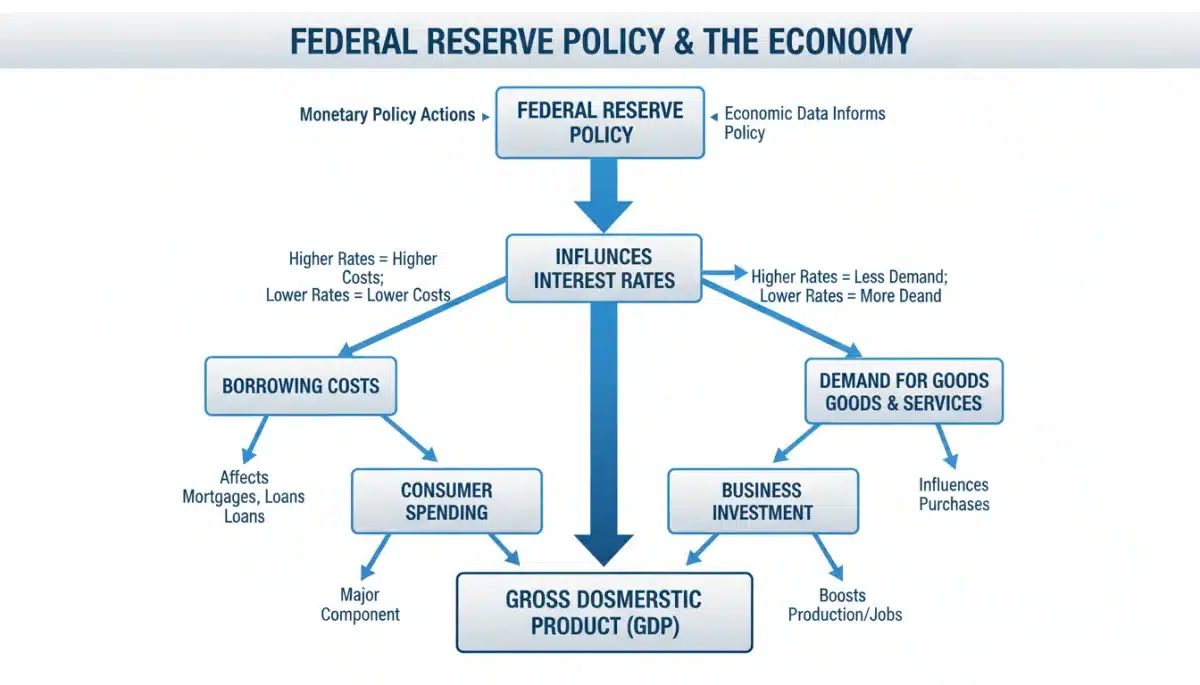
The Federal Reserve influences the economy through several distinct channels. Understanding these pathways helps to clarify how a 1.5% impact could manifest.
- Interest Rates: Changes in the federal funds rate directly affect borrowing costs for consumers and businesses, influencing spending and investment decisions.
- Asset Prices: Monetary policy can impact stock markets, bond yields, and real estate values, affecting household wealth and corporate balance sheets.
- Exchange Rates: Policy shifts can alter the value of the US dollar, impacting international trade and the competitiveness of American goods and services.
- Inflation Expectations: The Fed’s credibility in managing inflation influences public and business expectations, which in turn affect pricing and wage decisions.
These channels are interconnected, creating a complex web of effects. For example, higher interest rates might curb inflation but could also slow economic growth. The Fed’s challenge is to balance these outcomes to achieve its dual mandate effectively.
The 1.5% figure is likely an aggregate of these various influences. It suggests a noticeable, yet potentially manageable, adjustment rather than a drastic overhaul. Economists and market analysts will closely scrutinize the Fed’s communications to discern the precise direction and magnitude of the policy shift, allowing for better preparation and adaptation by economic actors.
Potential Scenarios: Tightening vs. Easing
When considering a Federal Reserve policy shift, the primary directions are either tightening or easing monetary conditions. Each path carries distinct implications for the economy, and the choice depends heavily on the prevailing economic climate and future outlook. The 2026 decision will hinge on which scenario the Fed believes is most appropriate to achieve its long-term goals.
A tightening policy typically involves raising interest rates, reducing the money supply, or both. This approach is often employed to combat inflation when the economy is overheating or growing too rapidly. Its aim is to cool demand, stabilize prices, and prevent asset bubbles. Conversely, an easing policy involves lowering interest rates, increasing the money supply, or implementing quantitative easing. This is usually done to stimulate economic growth during periods of recession or slow growth, encouraging borrowing, spending, and investment.
Implications of a Tightening Stance
If the Fed opts for a tightening policy in 2026, several economic consequences are likely to follow. Higher interest rates would make borrowing more expensive for consumers, potentially slowing down big-ticket purchases like homes and cars. Businesses would face higher costs for capital, which could dampen investment and expansion plans.
- Slower Economic Growth: Reduced spending and investment can lead to a deceleration in GDP growth.
- Lower Inflation: The primary goal of tightening is to bring down elevated inflation rates.
- Stronger Dollar: Higher interest rates can attract foreign investment, increasing demand for the dollar.
- Potential for Recession: Overly aggressive tightening can sometimes tip the economy into a downturn.
For individuals, this could mean higher mortgage rates, increased credit card interest, and potentially a more challenging job market. For businesses, it might entail tighter credit conditions and increased scrutiny of investment projects. The Fed’s communication will be critical in managing expectations and avoiding undue market volatility during such a transition.
Conversely, an easing stance would generally lead to the opposite effects, fostering growth but risking higher inflation. The 2026 Federal Reserve policy shift will represent a calculated decision based on the delicate balance of these economic forces, aiming to land the economy in a stable and prosperous state.
Sector-Specific Repercussions and Market Reactions
A significant Federal Reserve policy shift like the one anticipated for 2026 will not impact all sectors of the US economy equally. Different industries react uniquely to changes in interest rates, inflation expectations, and overall economic growth. Understanding these sector-specific repercussions is crucial for investors, businesses, and policymakers alike.
For instance, interest-rate-sensitive sectors such as real estate and automotive are often among the first to feel the effects. Higher borrowing costs can cool housing markets and reduce demand for new vehicles. Conversely, sectors less reliant on debt financing or those that benefit from stronger consumer spending power (if inflation is tamed) might fare better. Financial markets, including stocks and bonds, also react swiftly to Fed announcements, often anticipating moves well in advance.
Industries on the Front Lines
Certain industries are particularly exposed to shifts in monetary policy. Their performance can serve as bellwethers for the broader economy.
- Real Estate: Higher mortgage rates typically lead to a slowdown in home sales and construction.
- Financial Services: Banks and lenders can see changes in profitability due to interest rate differentials and loan demand.
- Technology: Growth companies, often reliant on future earnings discounted by interest rates, can be sensitive to rate hikes.
- Manufacturing: Investment in new equipment and facilities can be curtailed by higher borrowing costs.
- Consumer Discretionary: Spending on non-essential goods and services can be impacted by changes in disposable income and consumer confidence.
Investors will likely adjust their portfolios in anticipation of these shifts, favoring sectors expected to perform well under the new conditions. For example, during periods of rising rates, value stocks or dividend-paying companies might become more attractive than high-growth tech stocks.
Bond markets, too, will see adjustments. Government bond yields tend to move in anticipation of or reaction to Fed rate changes, affecting the cost of capital for corporations and governments. The 2026 Federal Reserve policy shift will undoubtedly trigger a re-evaluation of risk and return across all asset classes, leading to potential market volatility as participants recalibrate their strategies.
Preparing for the 2026 Federal Reserve Policy Shift
As the anticipated 2026 Federal Reserve policy shift approaches, proactive preparation becomes paramount for businesses, investors, and individual consumers. Understanding the potential implications and taking strategic steps can mitigate risks and capitalize on new opportunities. This forward-looking approach is essential in navigating economic transitions effectively.
For businesses, this might involve reviewing debt structures, optimizing cash flow, and carefully planning capital expenditures. Investors should reassess their portfolios for diversification and risk exposure, potentially rebalancing holdings to align with expected market conditions. Individuals may need to re-evaluate their personal finance strategies, from mortgage decisions to savings and investment plans.
Strategies for Businesses and Investors
Businesses and investors can adopt several strategies to prepare for the upcoming policy changes.
- Debt Management: For businesses, consider refinancing existing debt at favorable rates before potential increases. For individuals, locking in fixed-rate mortgages could be prudent.
- Portfolio Diversification: Investors should ensure their portfolios are well-diversified across different asset classes and sectors that may react differently to policy shifts.
- Cash Flow Optimization: Businesses should focus on strengthening cash reserves to weather potential economic slowdowns or increased borrowing costs.
- Scenario Planning: Both businesses and investors can benefit from developing multiple scenarios based on different Fed policy outcomes (e.g., aggressive tightening vs. moderate easing).
Clear communication from the Federal Reserve will be a critical guide. Paying close attention to FOMC statements, speeches by Fed officials, and economic projections can provide valuable insights into the likely direction and timing of policy changes. This information allows for more informed decision-making and reduces uncertainty.
Ultimately, flexibility and adaptability will be key. The economic landscape is dynamic, and the 2026 Federal Reserve policy shift is just one of many factors that will shape the future. By staying informed, planning strategically, and being prepared to adjust, economic actors can better position themselves to thrive in the evolving environment.
| Key Point | Brief Description |
|---|---|
| Policy Shift Expectation | The Federal Reserve is anticipated to enact a significant policy change by 2026. |
| Economic Impact | The shift is projected to impact the US economy by approximately 1.5%, affecting GDP, inflation, and employment. |
| Key Drivers | Inflation outlook, labor market conditions, and global economic trends are primary triggers. |
| Sectoral Effects | Real estate, finance, and technology sectors are expected to be particularly sensitive to these changes. |
Frequently Asked Questions About the 2026 Fed Policy Shift
The primary reasons include managing persistent inflation, responding to evolving labor market dynamics, and adapting to global economic conditions. The Fed aims to maintain price stability and maximum employment, necessitating policy adjustments as economic indicators evolve towards 2026.
A 1.5% impact could translate to changes in interest rates for mortgages and loans, affecting borrowing costs. It might also influence job availability, wage growth, and the cost of goods and services. The exact effect depends on whether the policy is tightening or easing conditions.
Sectors highly sensitive to interest rates, such as real estate, automotive, and financial services, are typically most vulnerable. Technology companies, which often rely on future growth prospects discounted by interest rates, can also experience significant impacts from policy shifts.
Many financial advisors suggest reviewing investment portfolios for diversification and risk exposure. Considering sectors that historically perform well under tightening or easing monetary conditions can be prudent. Consulting a financial expert for personalized advice is always recommended given individual circumstances.
If the policy is misjudged, it could lead to unintended consequences such as a recession from overly aggressive tightening, or runaway inflation from insufficient tightening. Market volatility, reduced consumer confidence, and instability in financial markets are also potential risks that the Fed aims to avoid.
Conclusion
The impending 2026 Federal Reserve policy shift represents a critical juncture for the US economy. With a projected 1.5% impact, this adjustment will ripple through various sectors, influencing everything from interest rates and inflation to employment and investment. Understanding the triggers, potential scenarios, and specific repercussions allows for better preparedness. Both businesses and individuals should proactively assess their financial strategies to navigate these changes effectively, ensuring resilience and adaptability in an evolving economic landscape. The Fed’s commitment to stability will guide these crucial decisions, shaping the economic future for years to come.