2026 Personal Finance Check-Up: 10 Steps to Financial Health
Anúncios
A personal finance check-up for 2026 involves a 10-step guide to assess and improve your financial health and security proactively.
As we navigate the complexities of modern economics, a thorough personal finance check-up for 2026 is not just advisable, it’s essential. This comprehensive guide will walk you through ten crucial steps to ensure your financial health and security are robust, preparing you for whatever the future holds.
Anúncios
Assessing Your Current Financial Standing
Before making any significant changes, it’s crucial to understand your starting point. This initial assessment forms the bedrock of your entire financial planning process. Without a clear picture of your assets, liabilities, income, and expenses, any subsequent steps would be based on assumptions rather than facts. Think of it as a financial snapshot, revealing both strengths and areas needing attention.
Anúncios
Gathering Essential Financial Documents
The first practical step is to collect all relevant financial documents. This includes bank statements, investment account summaries, loan documents, credit card statements, and recent tax returns. Having these readily accessible streamlines the entire review process.
- Bank statements (checking and savings)
- Investment account statements (brokerage, 401k, IRA)
- Loan documents (mortgage, auto, student)
- Credit card statements
- Recent tax returns (past 1-2 years)
Once gathered, meticulously review each document. Look for recurring patterns in your spending, identify any forgotten accounts, and confirm the accuracy of all reported figures. This detailed review can often uncover overlooked financial opportunities or potential risks.
Understanding your current financial standing is not merely an administrative task; it’s an empowering act. It provides the clarity needed to set realistic goals and develop an actionable plan. This foundational step ensures that your journey towards financial health in 2026 is built on solid, verifiable information.
Revisiting and Updating Your Budget
Your budget is the roadmap to your financial destination. Without a current and realistic budget, you’re essentially driving without directions. Economic shifts, lifestyle changes, and new financial goals necessitate a regular re-evaluation of your spending plan. A 2026 budget should reflect not only your current income and expenses but also anticipate future changes.
Start by categorizing all your income and expenses. This granular view helps identify where your money is truly going. Many people are surprised to find how much they spend on non-essential items once they see it laid out clearly.
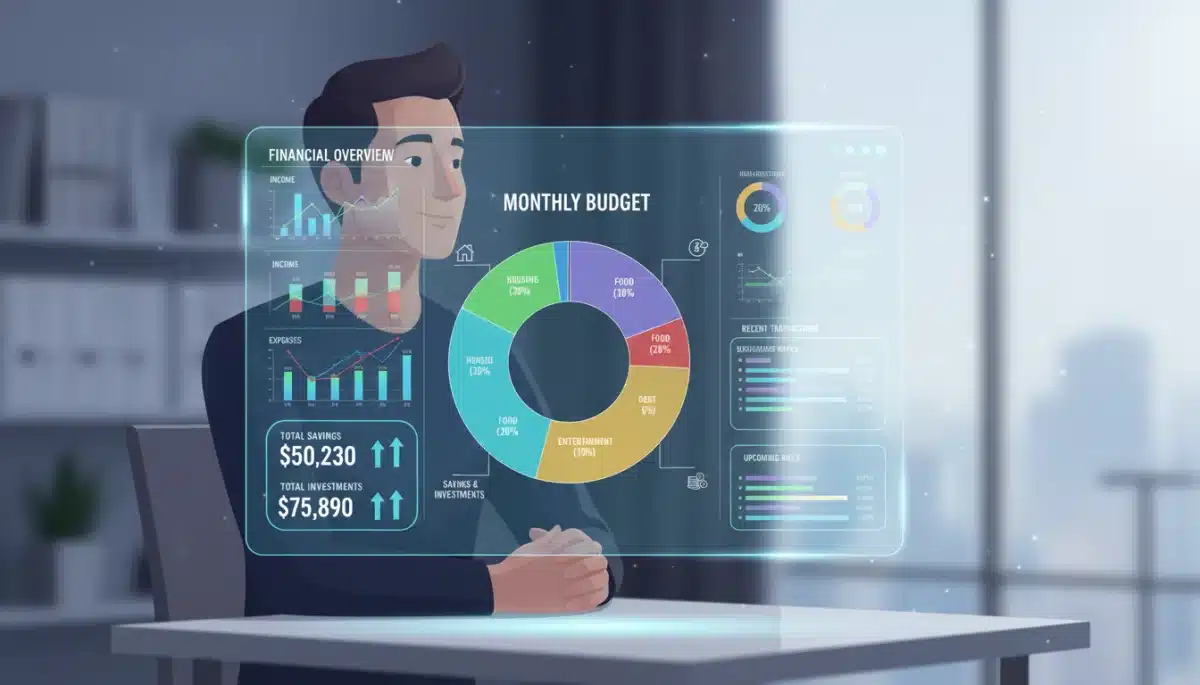
A useful approach is the 50/30/20 rule: 50% for needs, 30% for wants, and 20% for savings and debt repayment. While not a strict rule, it offers a flexible framework for managing your funds. Adjust these percentages to fit your unique financial situation and priorities.
Leveraging Technology for Budgeting
In 2026, there’s a plethora of budgeting apps and software that can automate much of this process. Tools that link directly to your bank accounts can categorize transactions, track spending in real-time, and even send alerts when you’re approaching budget limits. This technological assistance can transform budgeting from a tedious chore into an insightful exercise.
- Utilize budgeting apps for automated tracking.
- Set up alerts for spending categories.
- Regularly review categorized expenses to identify trends.
Regularly reviewing and updating your budget ensures it remains a living document that serves your financial goals. It’s not about restriction, but about conscious allocation of resources to achieve financial freedom and security.
Optimizing Debt Management Strategies
Debt can be a significant impediment to financial progress. For your 2026 personal finance check-up, it’s imperative to develop a robust strategy for managing and reducing outstanding debts. High-interest debts, in particular, can erode your financial stability and make it challenging to build wealth.
Begin by listing all your debts, including the principal amount, interest rate, and minimum monthly payment. This comprehensive overview helps prioritize which debts to tackle first. Generally, debts with the highest interest rates, such as credit card balances, should be addressed with urgency due to their compounding nature.
Implementing Debt Reduction Methods
Two popular strategies for debt reduction are the debt snowball and debt avalanche methods. The debt snowball involves paying off the smallest debts first to gain psychological momentum, while the debt avalanche focuses on paying off debts with the highest interest rates first to save money on interest charges. Choose the method that best aligns with your personality and financial discipline.
- Prioritize high-interest debts for accelerated repayment.
- Consider debt consolidation for lower interest rates.
- Negotiate with creditors for better terms if facing hardship.
Beyond active repayment, consider consolidating multiple high-interest debts into a single loan with a lower interest rate. This can simplify payments and reduce the overall cost of borrowing. However, be cautious of fees and ensure the new loan terms are truly beneficial. Effectively managing debt is a cornerstone of financial health, freeing up resources for saving and investing.
Boosting Your Emergency Savings
An adequate emergency fund is a non-negotiable component of financial security. Life is unpredictable, and unexpected expenses – a job loss, medical emergency, or car repair – can quickly derail your financial plans if you’re unprepared. For your 2026 personal finance check-up, reassess the robustness of your emergency savings.
Financial experts generally recommend having at least three to six months’ worth of essential living expenses saved in an easily accessible, liquid account, such as a high-yield savings account. This fund acts as a critical buffer, preventing you from resorting to high-interest debt when unforeseen circumstances arise.
Strategies for Building Your Emergency Fund
If your emergency fund is currently lacking, make it a top priority. Automate transfers from your checking account to your savings account each payday. Even small, consistent contributions can accumulate significantly over time. Treat this transfer as a non-negotiable expense, just like rent or utilities.
- Set up automatic transfers to a dedicated savings account.
- Designate windfalls (bonuses, tax refunds) to your emergency fund.
- Review your monthly expenses to find areas where you can cut back and save more.
The goal is not just to accumulate funds but to ensure their accessibility and safety. High-yield savings accounts offer a better return than traditional accounts while keeping your money liquid. Building and maintaining a strong emergency fund provides peace of mind and resilience against life’s unexpected turns, safeguarding your financial stability.
Reviewing and Optimizing Your Investment Portfolio
Investing is a powerful tool for wealth creation, and a regular review of your investment portfolio is critical to ensure it aligns with your financial goals and risk tolerance. For your 2026 personal finance check-up, take a deep dive into your investments, from retirement accounts to brokerage portfolios.
Market conditions evolve, and so should your investment strategy. Assess whether your asset allocation – the mix of stocks, bonds, and other investments – still reflects your long-term objectives and your comfort level with market fluctuations. As you approach different life stages, your risk tolerance typically shifts, requiring adjustments to your portfolio.
Diversification and Rebalancing
Diversification is key to mitigating risk. Ensure your portfolio isn’t overly concentrated in a single sector or asset class. Periodically rebalance your portfolio to bring it back to your target asset allocation. For instance, if stocks have performed exceptionally well, you might sell some to buy more bonds, restoring your desired balance. This disciplined approach helps manage risk and capture gains.
- Check if your asset allocation matches your risk tolerance.
- Ensure adequate diversification across different asset classes.
- Regularly rebalance your portfolio to maintain target allocations.
Consider consulting a financial advisor, especially if your portfolio is complex or if you’re unsure about making adjustments. Their expertise can provide valuable insights and help you navigate market complexities. Optimizing your investment portfolio is an ongoing process that is vital for long-term wealth accumulation and achieving your financial aspirations.
Planning for Retirement and Future Goals
Retirement planning is a marathon, not a sprint. Your 2026 personal finance check-up is an opportune moment to evaluate your progress towards retirement and other significant future goals, such as buying a home, funding education, or starting a business. Proactive planning ensures these aspirations remain within reach.
Begin by reviewing your retirement accounts, such as 401(k)s, IRAs, and any other pension plans. Are you maximizing your contributions, especially if your employer offers a matching program? Missing out on employer matches is essentially leaving free money on the table, significantly impacting your long-term growth.
Setting Clear Financial Milestones
For each future goal, establish clear, measurable, achievable, relevant, and time-bound (SMART) objectives. For instance, instead of vaguely wanting to save for a down payment, set a specific amount, a target date, and a monthly savings contribution. This clarity makes the goal feel more tangible and actionable.
- Maximize contributions to retirement accounts, especially employer-matched plans.
- Define SMART goals for all major future financial objectives.
- Regularly review progress against your savings targets.
Beyond retirement, consider other long-term savings vehicles like 529 plans for education or a separate brokerage account for a down payment. Each goal may benefit from a tailored savings strategy. Consistent contributions and periodic reviews are essential to staying on track, transforming future dreams into present realities through diligent financial planning.
| Key Financial Action | Brief Description |
|---|---|
| Assess Current Standing | Review all assets, liabilities, income, and expenses to get a clear financial picture. |
| Update Budget | Adjust your spending plan to reflect current income, expenses, and financial goals. |
| Optimize Debt | Implement strategies to reduce high-interest debts and simplify repayments. |
| Boost Emergency Savings | Build a robust emergency fund for unexpected expenses, aiming for 3-6 months of living costs. |
Frequently Asked Questions About Your 2026 Financial Check-Up
A personal finance check-up for 2026 is crucial because economic conditions, personal circumstances, and financial goals constantly evolve. Regular reviews ensure your financial strategy remains aligned with your objectives and helps you adapt to new opportunities or challenges, safeguarding your financial future.
You should review your budget at least once a quarter, or whenever there’s a significant change in your income, expenses, or financial goals. This regular review helps you stay on track, identify areas for improvement, and ensure your spending aligns with your priorities.
The debt avalanche method is often recommended for high-interest debt. This involves paying off debts with the highest interest rates first, saving you more money over time. Alternatively, debt consolidation can simplify payments and potentially reduce your overall interest burden.
Financial experts typically recommend having three to six months’ worth of essential living expenses saved in an easily accessible, high-yield savings account. This fund provides a critical safety net against unexpected events like job loss, medical emergencies, or unforeseen repairs.
Consider consulting a financial advisor if your financial situation is complex, you’re unsure about investment strategies, or you need help with long-term planning like retirement or estate planning. An advisor can offer personalized guidance and expertise to help you achieve your financial goals effectively.
Conclusion
Embarking on a comprehensive personal finance check-up for 2026 is more than just an annual chore; it’s a proactive commitment to your financial well-being. By systematically assessing your current standing, refining your budget, optimizing debt, bolstering savings, and strategically managing investments, you lay a solid foundation for financial health and security. This 10-step guide provides a clear roadmap, empowering you to navigate the future with confidence and achieve your long-term financial aspirations. Remember, consistent effort and periodic reviews are key to sustaining a robust financial life.