2026 COLA Impact: How Adjustments Affect Your Benefits

Anúncios
The 2026 COLA impact is crucial for beneficiaries, as it directly influences the purchasing power of Social Security and other government benefits. Understanding these adjustments is vital for informed financial planning.
Anúncios
The anticipation surrounding the 2026 COLA impact on benefits is growing, as millions of Americans rely on these adjustments to maintain their purchasing power amidst rising living costs. Understanding how Cost-of-Living Adjustments work and their projected influence in 2026 is essential for effective financial planning and securing your future.
Anúncios
Understanding COLA: The Basics
Cost-of-Living Adjustments (COLA) are vital mechanisms designed to protect the purchasing power of Social Security and other federal benefits from the erosion caused by inflation. Each year, the Social Security Administration (SSA) reviews economic data to determine if an adjustment is necessary, ensuring that beneficiaries can keep pace with the increasing cost of goods and services. This annual recalculation is a cornerstone of financial stability for retirees, disabled individuals, and survivors.
Historically, COLA has been tied to the Consumer Price Index for Urban Wage Earners and Clerical Workers (CPI-W), which tracks the prices of a basket of consumer goods and services. The percentage increase in the CPI-W from the third quarter of one year to the third quarter of the next typically dictates the COLA for the following year. This method aims to reflect the real-world expenses faced by many beneficiaries, although its effectiveness is often debated.
How COLA is Calculated
The calculation of COLA is a precise process, primarily based on the CPI-W. The Social Security Act specifies that if the CPI-W increases from the third quarter of the previous year to the third quarter of the current year, benefits will be adjusted accordingly. If there is no increase, or if the CPI-W decreases, there is no COLA for that year. This ensures that benefits do not fall behind inflation, at least in theory.
- Data Collection: The Bureau of Labor Statistics (BLS) collects price data for thousands of items.
- CPI-W Calculation: This data is used to calculate the CPI-W, a specific index for urban wage earners.
- Comparison Period: The average CPI-W for the third quarter (July, August, September) is compared year-over-year.
- Adjustment Determination: The percentage increase, if any, becomes the COLA for the upcoming year.
Understanding these basics is the first step in comprehending the potential 2026 COLA impact. It highlights the direct link between economic inflation and the financial well-being of millions of Americans.
Projected Economic Landscape for 2026
Forecasting the economic landscape for 2026 involves analyzing a multitude of factors, including inflation trends, interest rates, global economic stability, and domestic policy shifts. These elements collectively shape the environment in which COLA determinations are made. While predicting the future with absolute certainty is impossible, economists and analysts use current data and historical patterns to project potential scenarios that could influence the 2026 COLA impact.
Inflation, in particular, remains a critical determinant. After periods of elevated inflation, there is often a lag before the full effects are seen in COLA adjustments. For 2026, the trajectory of consumer prices will be paramount. Supply chain dynamics, geopolitical events, and energy prices are all variables that could either stabilize or accelerate inflationary pressures, directly affecting the CPI-W and, consequently, the COLA. Policymakers will also play a role, as fiscal and monetary policies aimed at managing economic growth and inflation will have downstream effects.
Inflationary Pressures and CPI-W Trends
Recent years have seen fluctuating inflation rates, making future projections complex. For 2026, experts will be closely monitoring core inflation, which excludes volatile food and energy prices, to get a clearer picture of underlying price trends. Persistent wage growth, strong consumer demand, and ongoing global supply chain adjustments could all contribute to sustained inflationary pressures that would necessitate a significant COLA.
- Wage Growth: Sustained increases in wages can drive up production costs, leading to higher consumer prices.
- Consumer Demand: Robust consumer spending can put upward pressure on prices, especially for goods and services with inelastic supply.
- Global Events: Geopolitical conflicts or natural disasters can disrupt supply chains, causing price spikes.
- Energy Costs: Fluctuations in oil and gas prices directly impact transportation and manufacturing costs, affecting nearly all sectors.
The interplay of these factors will ultimately dictate the CPI-W trend leading up to the 2026 COLA announcement. Beneficiaries should stay informed about these economic indicators to better anticipate potential adjustments.
Anticipated 2026 COLA Impact on Social Security
The 2026 COLA impact on Social Security benefits is a primary concern for millions of retirees, survivors, and individuals with disabilities. A significant adjustment could provide crucial financial relief, helping beneficiaries cope with the rising cost of living. Conversely, a smaller or non-existent COLA could strain household budgets, especially for those on fixed incomes.
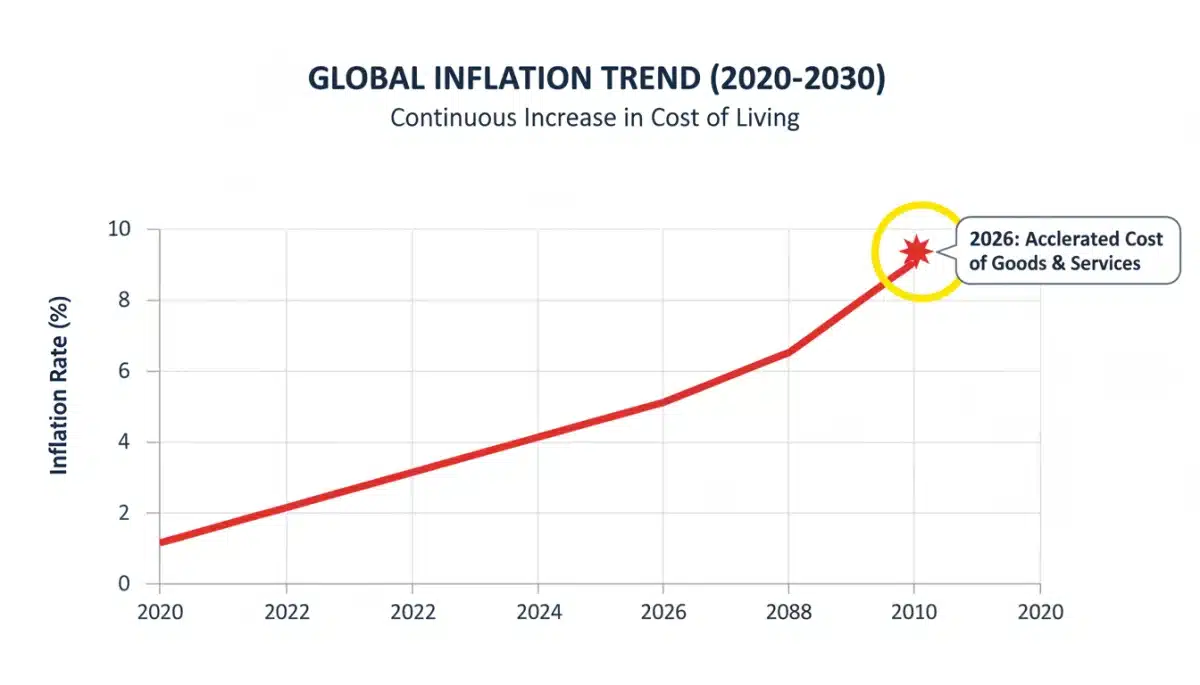
Early projections for the 2026 COLA are speculative but often based on current inflation trends and expert consensus. While official figures are not released until much closer to the announcement date, preliminary analyses often consider factors like current CPI-W data and economic forecasts. These initial insights help beneficiaries begin to conceptualize how their future benefits might be affected, allowing for proactive financial planning.
How COLA Affects Different Beneficiary Groups
The impact of COLA is not uniform across all beneficiary groups. While a general increase applies to all Social Security recipients, the real-world effect can vary based on individual circumstances, such as other sources of income, health care costs, and geographic location. For instance, individuals heavily reliant on Social Security for their entire income may feel the effects of COLA more acutely than those with substantial retirement savings.
- Retirees: A higher COLA can help maintain lifestyle and cover increasing expenses like housing and utilities.
- Disabled Individuals: COLA ensures that disability benefits keep pace with inflation, supporting essential living costs.
- Survivors: Widows, widowers, and children receiving benefits also see their payments adjusted, helping to preserve their financial security.
Beyond the direct increase in benefit payments, the 2026 COLA impact can also influence other aspects of financial planning, such as tax obligations and eligibility for certain means-tested programs. Understanding these broader implications is key to comprehensive financial management.
Beyond Social Security: Other Benefits Affected by COLA
While Social Security is perhaps the most widely recognized program impacted by COLA, many other federal benefits are also subject to similar cost-of-living adjustments. These adjustments ensure that a broader range of aid programs maintains their effectiveness in supporting vulnerable populations. Understanding the full scope of benefits affected by COLA provides a more complete picture of its overall economic significance.
Programs such as Supplemental Security Income (SSI) are directly linked to COLA, providing essential income support for low-income individuals who are aged, blind, or disabled. Veterans’ benefits, including disability compensation and pensions, also often see annual adjustments, reflecting the commitment to support those who have served. These parallel adjustments underscore the systemic importance of COLA in the federal benefits landscape.
SSI and Veterans’ Benefits Adjustments
Supplemental Security Income (SSI) is a needs-based program that provides financial assistance to eligible individuals. Like Social Security, SSI benefits are subject to annual COLA increases, ensuring that recipients can meet basic needs as living costs rise. The 2026 COLA impact will therefore be critical for SSI beneficiaries, directly influencing their monthly support.
- SSI Eligibility: While COLA increases benefits, it’s important for recipients to monitor their total income to avoid exceeding eligibility thresholds for other programs.
- Veterans’ Compensation: Disability compensation and pension benefits for veterans are also adjusted annually, usually mirroring the Social Security COLA.
- Federal Retiree Pensions: Many federal civilian and military retirement pensions also include COLA provisions, protecting the purchasing power of these long-term benefits.
These adjustments are crucial for maintaining the financial well-being of diverse groups of beneficiaries across the nation, extending the reach of COLA far beyond just Social Security.
Strategies for Adapting to the 2026 COLA Impact
Regardless of the final 2026 COLA impact, beneficiaries can employ various strategies to optimize their financial situation and ensure their benefits stretch further. Proactive planning and informed decision-making are essential, especially for those on fixed incomes. Adapting to economic shifts requires a comprehensive approach that considers all aspects of personal finance.
One key strategy involves budgeting meticulously. Understanding exactly where money is going can help identify areas for potential savings or reallocation. Reviewing discretionary spending, negotiating bills, and seeking out cost-saving alternatives for essential services can all contribute to a more robust financial standing. Furthermore, exploring opportunities for supplemental income, even part-time, can provide an additional buffer against inflation.
Financial Planning and Budgeting Tips
Effective financial planning is paramount when anticipating COLA changes. Creating a detailed budget allows individuals to track income and expenses, providing a clear picture of their financial health. This can help in making informed decisions about how to best utilize any COLA increase or mitigate the effects of a smaller adjustment.
- Create a Detailed Budget: Track all income and expenses to identify spending patterns and areas for adjustment.
- Build an Emergency Fund: Having savings for unexpected costs can provide financial security, reducing reliance solely on benefits.
- Review Healthcare Costs: Healthcare expenses often increase, so understanding Medicare premiums and out-of-pocket costs is crucial.
- Consider Supplemental Income: Explore part-time work or side gigs to supplement benefits, if feasible.
By implementing these strategies, individuals can better prepare for and adapt to the 2026 COLA impact, fostering greater financial resilience.
Long-Term Implications of COLA Trends
The 2026 COLA impact is not just a one-time event; it’s part of a larger trend that has significant long-term implications for the solvency of Social Security and the financial stability of future generations. Understanding these broader trends is essential for comprehensive policy discussions and individual retirement planning. The sustainability of COLA, particularly in periods of high inflation, raises important questions about the future of federal benefits.
Demographic shifts, such as an aging population and declining birth rates, place increasing pressure on the Social Security system. While COLA ensures that current beneficiaries maintain purchasing power, the mechanism itself doesn’t address the underlying financial health of the trust funds. Policymakers continuously grapple with how to balance the immediate needs of beneficiaries with the long-term viability of these critical programs. Future COLA adjustments will likely be influenced by ongoing debates about Social Security reform and broader economic policies.
Future of Social Security and Benefit Sustainability
The long-term sustainability of Social Security is a perennial topic of discussion. While COLA plays a crucial role in protecting beneficiaries, the system faces challenges that extend beyond annual adjustments. Factors such as the ratio of workers to retirees, wage growth, and investment returns on trust funds all contribute to the program’s financial outlook. Addressing these issues will require thoughtful policy decisions and potentially adjustments to how benefits are funded or calculated in the future.
- Demographic Challenges: An aging population means more beneficiaries drawing from the system relative to contributors.
- Economic Growth: Sustained economic growth and higher wages can increase the tax base, bolstering Social Security revenues.
- Policy Reforms: Potential legislative changes to retirement age, taxation of benefits, or benefit formulas could impact future COLA.
- Inflation Indexing: Debates continue about whether the CPI-W is the most appropriate index for COLA, with some advocating for alternative measures like the CPI-E (Consumer Price Index for the Elderly).
The 2026 COLA impact, therefore, serves as a timely reminder of the ongoing need to ensure that Social Security and other federal benefits remain robust and equitable for all Americans, both now and in the future.
Preparing for Future COLA Announcements
Being prepared for future COLA announcements, including the 2026 COLA impact, involves staying informed and adopting a proactive approach to personal finance. The annual COLA determination is a significant event for millions, and understanding the factors that influence it can empower beneficiaries to make better decisions. This preparedness extends beyond just knowing the percentage increase; it involves understanding its implications for your overall financial picture.
Regularly monitoring economic news, particularly reports on inflation and consumer prices, can provide early indicators of potential COLA trends. Financial advisors can also offer personalized guidance, helping individuals integrate anticipated COLA changes into their broader retirement or benefits planning. The goal is to minimize surprises and maximize the effectiveness of your benefits, ensuring financial stability in a dynamic economic environment.
Resources for Beneficiaries
Accessing reliable information and resources is key to staying ahead of COLA changes. The Social Security Administration (SSA) website is an invaluable source for official announcements and detailed explanations of how COLA is calculated. Additionally, various financial planning websites and government publications offer insights into economic forecasts and strategies for managing benefits.
- Social Security Administration (SSA) Website: Official source for COLA announcements and benefit information.
- Bureau of Labor Statistics (BLS): Provides detailed CPI data, which is fundamental to COLA calculations.
- Financial Advisors: Can offer personalized advice on how COLA changes might affect your specific financial plan.
- Reputable News Outlets: Stay informed about economic trends and expert predictions regarding inflation and COLA.
By leveraging these resources, beneficiaries can remain well-informed and better equipped to navigate the complexities of COLA adjustments, including the significant 2026 COLA impact.
| Key Aspect | Brief Description |
|---|---|
| COLA Purpose | Protects purchasing power of benefits against inflation. |
| Calculation Basis | Primarily based on the Consumer Price Index for Urban Wage Earners (CPI-W). |
| Affected Benefits | Social Security, SSI, Veterans’ benefits, and federal pensions. |
| Preparation | Budgeting, monitoring inflation, and seeking financial advice are key. |
Frequently Asked Questions About 2026 COLA
The main objective of the 2026 COLA is to ensure that Social Security and other federal benefits maintain their purchasing power. It protects beneficiaries from inflation by adjusting payments to reflect increases in the cost of living, helping to cover essential expenses.
The 2026 COLA rate will be primarily determined by the increase in the Consumer Price Index for Urban Wage Earners and Clerical Workers (CPI-W). The Social Security Administration compares the CPI-W from the third quarter of 2025 to the third quarter of 2024.
The 2026 COLA will impact various federal benefits, most notably Social Security retirement, disability, and survivor benefits. Supplemental Security Income (SSI), certain Veterans’ benefits, and federal civilian and military pensions are also typically adjusted.
The official 2026 COLA announcement is typically made by the Social Security Administration in October of 2025. This allows beneficiaries and agencies time to prepare for the adjustments that will take effect starting in January 2026.
To prepare for the 2026 COLA impact, it’s advisable to review your budget, monitor inflation trends, and consider consulting with a financial advisor. Understanding how any adjustment might affect your overall financial plan is crucial for stability.
Conclusion
The 2026 COLA impact stands as a critical factor in the financial well-being of millions of Americans. From Social Security recipients to veterans and SSI beneficiaries, these annual adjustments are designed to be a bulwark against the eroding effects of inflation. While the exact percentage remains to be seen, understanding the mechanisms behind COLA, the broader economic landscape, and effective financial planning strategies are paramount. By staying informed and proactive, individuals can better navigate the changes and ensure their benefits continue to support their cost of living, fostering greater financial security for the years to come.