2026 Vocational Training Trends: High-Paying Careers in 12 Months
Anúncios
The job market in 2026 demands rapid skill acquisition, with vocational training trends highlighting high-paying careers achievable within 12 months, offering time-sensitive opportunities for focused skill development and career advancement.
As we navigate towards 2026, understanding the evolving job market is crucial for anyone looking to secure a stable and prosperous future. The landscape of employment is shifting rapidly, and with it, the demand for specific skills. This article delves into the most promising vocational training trends for 2026, highlighting high-paying careers you can realistically embark on in just 12 months, alongside time-sensitive opportunities for skill development that are essential for success in the coming years.
Anúncios
The evolving landscape of vocational education in 2026
The vocational education landscape is undergoing a significant transformation, driven by technological advancements and shifting industry needs. Traditional trades are being augmented with digital skills, and entirely new fields are emerging, creating a dynamic environment for learners.
Anúncios
In 2026, vocational training programs are increasingly focused on delivering practical, job-ready skills in condensed timeframes. This shift is a direct response to the urgent demand from industries for a skilled workforce capable of adapting to rapid innovation and new operational paradigms. The emphasis is on immediate applicability and real-world problem-solving, moving beyond theoretical knowledge alone.
Digital integration across all trades
One of the most profound changes is the pervasive integration of digital technologies into nearly every vocational field. From smart manufacturing to digital marketing, a foundational understanding of data, automation, and cybersecurity is becoming indispensable. This means that even traditional roles now require a tech-savvy approach.
- Smart Manufacturing: Incorporating IoT, AI, and robotics for optimized production.
- Digital Construction: Utilizing Building Information Modeling (BIM) and drone technology for site management.
- Automotive Technology: Focusing on electric vehicles, autonomous systems, and diagnostic software.
- Healthcare IT: Managing electronic health records, telemedicine platforms, and data analytics.
These integrations are not merely add-ons but fundamental components of modern vocational curricula. Institutions are partnering with industry leaders to ensure their programs remain cutting-edge, providing students with access to the latest tools and methodologies. This collaborative approach ensures graduates are not just trained, but truly prepared for the demands of the contemporary workplace.
The evolving landscape also emphasizes soft skills, such as critical thinking, problem-solving, and adaptability. While technical proficiency remains paramount, the ability to collaborate, communicate effectively, and continuously learn are equally valued by employers. Vocational programs are increasingly embedding these skills into their curriculum, recognizing their importance for long-term career success.
High-paying careers emerging from short-term training
The notion that high-paying careers require extensive four-year degrees is being increasingly challenged by the rise of specialized vocational training. In 2026, several fields offer lucrative opportunities that can be accessed through intensive, short-term programs, often completed within a year.
These careers are characterized by a high demand for specific technical skills that are not easily automated or outsourced. Employers are willing to pay a premium for individuals who can immediately contribute value to their organizations. The focus here is on practical expertise, honed through hands-on learning and industry-relevant certifications.
Cybersecurity technician
With the escalating threat of cyberattacks, cybersecurity professionals are in exceptionally high demand. Vocational programs can train individuals to become cybersecurity technicians, incident response specialists, or security analysts in as little as 6-12 months. These roles involve protecting an organization’s digital assets, identifying vulnerabilities, and responding to security breaches.
- Key Skills: Network security, threat detection, ethical hacking basics, compliance.
- Average Entry-Level Salary: Often starts above $60,000 annually, with significant growth potential.
Renewable energy technician
The global push towards sustainable energy sources has created a boom in the renewable energy sector. Technicians specializing in solar panel installation and maintenance, wind turbine technology, or battery storage systems are highly sought after. These roles are critical for the deployment and upkeep of green infrastructure.
- Key Skills: Electrical systems, safety protocols, specific renewable energy technology installation and repair.
- Average Entry-Level Salary: Can range from $50,000 to $70,000, depending on specialization and location.
These examples illustrate a broader trend: industries facing critical skill gaps are actively seeking vocational graduates. The speed at which these programs can deliver qualified professionals makes them incredibly attractive to both students and employers. Furthermore, many of these roles offer clear pathways for career advancement, allowing individuals to build on their initial training with further certifications and experience.
The investment in these short-term programs often yields a rapid return, making them a financially sound choice for career changers or those entering the workforce. The practical nature of the training ensures graduates are not just knowledgeable, but also highly competent and ready to tackle real-world challenges from day one.
Advanced manufacturing and robotics
The manufacturing sector is no longer about repetitive assembly lines but has transformed into a high-tech environment driven by automation, robotics, and advanced materials. Vocational training in advanced manufacturing equips individuals with the skills to operate, program, and maintain sophisticated machinery, often in high-precision industries.
These roles are crucial for maintaining competitiveness in global markets, as they directly impact efficiency, quality, and innovation. The demand for skilled technicians in this area is projected to grow steadily, making it a stable and rewarding career path.
Robotics and automation technician
Technicians in this field install, program, troubleshoot, and repair robotic systems used in manufacturing, logistics, and even healthcare. Their expertise ensures smooth operation of automated processes, minimizing downtime and maximizing productivity. This is a hands-on role requiring a blend of mechanical, electrical, and programming knowledge.
- Core Competencies: Robot programming languages, PLC (Programmable Logic Controller) systems, industrial controls, mechatronics.
- Career Outlook: Strong demand, with competitive salaries and opportunities for specialization.
Additive manufacturing specialist (3D printing)
Additive manufacturing, commonly known as 3D printing, is revolutionizing product development and custom fabrication. Specialists in this area design, operate, and maintain 3D printers, working with various materials to create prototypes, tools, and finished products. This field requires a blend of design aptitude and technical understanding of printing processes.
- Essential Skills: CAD software proficiency, material science basics, 3D printer operation and maintenance, quality control.
- Industry Impact: Critical for innovation in aerospace, medical devices, and consumer goods.

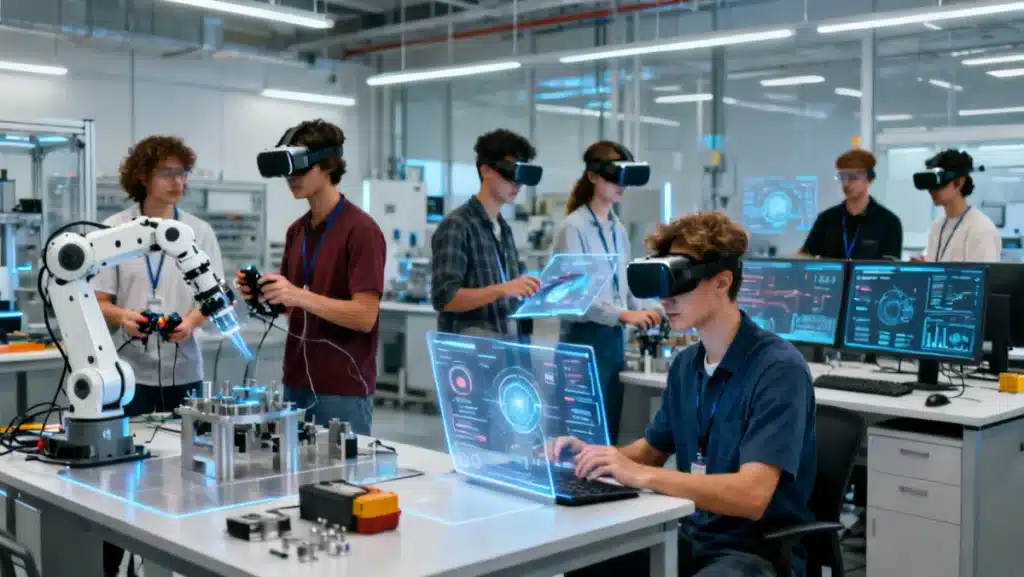
Vocational programs in advanced manufacturing often incorporate simulated environments and real-world projects, allowing students to gain practical experience before entering the workforce. These immersive learning experiences are vital for developing the confidence and competence required to excel in these high-tech roles.
The conclusion for this section is that advanced manufacturing and robotics offer a gateway to careers that are both intellectually stimulating and financially rewarding. The continuous evolution of technology in this sector ensures that learning is an ongoing process, providing opportunities for continuous skill development and career growth.
Healthcare support and medical technology
The healthcare industry continues to be a cornerstone of the US economy, and its growth is only accelerating as the population ages and medical technologies advance. Vocational training plays a critical role in supplying the frontline and technical support staff essential for healthcare delivery.
These roles are not only stable but also offer a profound sense of purpose, contributing directly to patient well-being. Many positions are accessible through short-term certification programs, making them ideal for individuals seeking a rapid entry into a meaningful career.
Medical assistant and patient care technician
Medical assistants perform administrative and clinical tasks in healthcare settings, while patient care technicians provide direct patient support under the supervision of nurses. Both roles are vital for the smooth operation of clinics, hospitals, and long-term care facilities. Training programs are typically 6-12 months.
- Key Responsibilities: Taking vital signs, assisting with examinations, scheduling appointments, phlebotomy, basic EKG.
- Work Environment: Hospitals, physician’s offices, urgent care centers, nursing homes.
Diagnostic medical sonographer
Diagnostic medical sonographers operate specialized equipment that uses sound waves to create images of structures inside the body. These images are crucial for diagnosing and monitoring medical conditions. While requiring a more intensive program, typically 18-24 months, it offers excellent pay and job security.
- Technical Skills: Operating ultrasound equipment, image interpretation, patient positioning, maintaining detailed records.
- High Demand: Continuously growing due to advancements in medical imaging and an aging population.
The healthcare sector also sees a high demand for specialized technicians who can operate and maintain complex medical equipment. Biomedical equipment technicians, for instance, ensure that everything from MRI machines to infusion pumps is functioning correctly, a role that combines technical expertise with a direct impact on patient care.
Vocational healthcare programs often include extensive clinical rotations, providing students with invaluable hands-on experience in real healthcare environments. This practical exposure is critical for developing the confidence and competence needed to perform effectively in these demanding roles. The conclusion is that healthcare support and medical technology careers offer a blend of stability, strong earning potential, and the deep satisfaction of helping others, all accessible through focused vocational training.
Information technology and data skills
In 2026, proficiency in information technology and data management is no longer a niche skill but a fundamental requirement across almost every industry. Vocational training programs in IT are designed to rapidly equip individuals with the technical acumen needed to manage, analyze, and secure digital information, which is the lifeblood of modern businesses.
These careers offer not only high financial rewards but also significant opportunities for continuous learning and professional growth, as the tech landscape is constantly evolving. Short-term certifications and bootcamps are particularly effective pathways into these roles.
Cloud computing specialist
Cloud computing has become the backbone of modern enterprise infrastructure. Specialists in this area manage cloud services, deploy applications, and ensure data security within cloud environments (e.g., AWS, Azure, Google Cloud). This field demands a strong understanding of network architecture, virtualization, and security protocols.
- Key Certifications: AWS Certified Solutions Architect, Microsoft Certified: Azure Administrator Associate.
- Role Scope: Cloud infrastructure management, deployment, monitoring, and optimization.
Data analyst and business intelligence developer
Businesses are awash in data, but without skilled analysts, this data remains untapped potential. Data analysts collect, process, and perform statistical analyses on large datasets to help organizations make informed decisions. Business intelligence developers create dashboards and reports that visualize key insights, making complex data accessible to stakeholders. Vocational programs can provide the foundational skills in data manipulation and visualization.
- Essential Tools: SQL, Python, R, Excel, Tableau, Power BI.
- Impact: Drives strategic planning, operational efficiency, and market understanding.
The demand for IT and data professionals is driven by the increasing digitalization of every business function. From e-commerce to logistics, and from finance to entertainment, data-driven decision-making is paramount. Vocational training in these areas often includes project-based learning, allowing students to build portfolios that demonstrate their practical skills to potential employers.
Graduates from these programs are highly adaptable, equipped not just with technical skills but also with the problem-solving mindset necessary to thrive in dynamic tech environments. The conclusion for this section is that IT and data skills offer some of the most promising and high-paying vocational career paths, with continuous innovation ensuring long-term relevance and growth.
Green trades and sustainability careers
As environmental concerns escalate and the push for sustainability intensifies, a new wave of green trades and careers is gaining prominence. These roles are critical for transitioning to a more environmentally friendly economy, focusing on energy efficiency, waste reduction, and sustainable resource management. Vocational training in these areas offers not only stable employment but also the satisfaction of contributing to a healthier planet.
Many of these careers involve a blend of traditional trade skills with a modern, eco-conscious approach. They are often hands-on and require practical expertise developed through specialized training programs.
HVAC technician with green technology specialization
Heating, Ventilation, and Air Conditioning (HVAC) technicians are essential for maintaining comfortable indoor environments. With a green technology specialization, they focus on installing, maintaining, and repairing energy-efficient systems, such as geothermal heat pumps, smart thermostats, and advanced ventilation systems designed to reduce energy consumption and carbon footprint.
- Specialized Skills: Geothermal systems, solar thermal applications, energy auditing, smart home integration.
- Environmental Impact: Directly contributes to energy conservation and reduced greenhouse gas emissions.
Environmental compliance and remediation technician
These technicians work to ensure that businesses and industries comply with environmental regulations. They might be involved in monitoring pollution levels, conducting site assessments, assisting with hazardous waste management, or participating in environmental clean-up projects. This role often requires a keen eye for detail and a strong understanding of environmental laws.
- Core Tasks: Sample collection, data analysis, regulatory reporting, site safety protocols.
- Industry Sectors: Government agencies, environmental consulting firms, manufacturing, construction.
The growth in green trades is not just about new technologies but also about applying sustainable practices to existing industries. For example, sustainable agriculture technicians use innovative methods to optimize crop yields while minimizing environmental impact, and eco-friendly construction workers implement green building standards.
Vocational programs in sustainability often emphasize fieldwork and practical application, allowing students to engage directly with environmental challenges and solutions. This hands-on experience is crucial for developing the problem-solving skills needed in these dynamic fields.
The conclusion for this section is that green trades and sustainability careers offer a robust and future-proof career path, aligning economic opportunity with environmental stewardship. The demand for these skills will only grow as societies worldwide prioritize ecological responsibility.
The importance of continuous learning and adaptability
Regardless of the vocational path chosen, one of the most critical skills for success in 2026 and beyond is the commitment to continuous learning and adaptability. The pace of technological change is relentless, and industries are constantly evolving, meaning that the skills acquired today may need to be updated or augmented tomorrow.
This mindset is particularly vital in fields driven by rapid innovation, such as technology and advanced manufacturing. Employers increasingly value individuals who demonstrate a proactive approach to skill development and are comfortable embracing new tools and methodologies.
Upskilling and reskilling initiatives
Many organizations are investing in upskilling their existing workforce to meet new demands, and vocational institutions are offering modular programs and micro-credentials that allow professionals to acquire specific, in-demand skills without committing to a full degree. Reskilling, on the other hand, involves training for entirely new roles when old ones become obsolete.
- Micro-credentials: Short, focused certifications proving competence in a specific skill.
- Online Learning Platforms: Accessible resources for self-paced learning and professional development.
- Industry Certifications: Recognized standards that validate expertise in a particular technology or methodology.
Embracing soft skills for future success
Beyond technical proficiency, soft skills are becoming increasingly important. Critical thinking, problem-solving, creativity, emotional intelligence, and effective communication are crucial for navigating complex work environments and collaborating effectively. Vocational training programs are incorporating these elements more explicitly into their curricula.
The ability to adapt to new technologies, work effectively in diverse teams, and approach challenges with a flexible mindset are attributes that will differentiate successful professionals. These are not innate traits but can be developed and refined through practice and intentional learning.
The conclusion for this section is that while specific vocational skills open doors to high-paying careers, the meta-skill of continuous learning and adaptability is what ensures long-term career resilience and growth. Investing in personal and professional development is an ongoing commitment that pays dividends throughout one’s working life.
| Key Vocational Field | Brief Career Outlook |
|---|---|
| Cybersecurity Technician | High demand due to increasing cyber threats; strong salary growth. |
| Renewable Energy Technician | Booming sector with stable jobs in solar, wind, and battery tech. |
| Robotics & Automation Technician | Critical for advanced manufacturing; competitive pay and specialization. |
| Cloud Computing Specialist | Essential for modern IT infrastructure; high demand across industries. |
Frequently asked questions about vocational training
The fastest-growing vocational careers for 2026 include cybersecurity technicians, renewable energy specialists, robotics and automation technicians, cloud computing specialists, and various healthcare support roles. These fields are experiencing high demand due to technological advancements and evolving industry needs, offering rapid entry and strong earning potential.
Yes, absolutely. Many intensive vocational programs are specifically designed to provide job-ready skills for in-demand fields within 6-12 months. Industries like IT, healthcare, and skilled trades often pay competitive salaries for certified professionals, recognizing the value of specialized practical expertise over longer academic degrees.
Beyond specific technical skills, critical thinking, problem-solving, adaptability, and digital literacy are paramount. Employers also highly value communication, teamwork, and a commitment to continuous learning. These soft skills ensure graduates can thrive in dynamic work environments and remain relevant as technologies evolve.
Look for programs accredited by recognized bodies, with strong industry partnerships and high job placement rates. Research reviews, visit campuses, and speak with current students or alumni. Ensure the curriculum aligns with current industry standards and provides practical, hands-on experience relevant to your career goals.
Many vocational careers offer excellent long-term stability, particularly those in essential services like healthcare, skilled trades, and technology. While specific tools and techniques may evolve, the underlying demand for these skills remains strong. Continuous upskilling and adaptability help ensure career longevity in a changing job market.
Conclusion
The landscape of vocational training in 2026 presents a wealth of opportunities for individuals seeking to quickly enter high-paying careers. By focusing on time-sensitive skill development in fields such as cybersecurity, renewable energy, advanced manufacturing, healthcare, and IT, aspiring professionals can equip themselves with the practical expertise demanded by today’s leading industries. The emphasis on hands-on learning, industry-aligned curricula, and a commitment to continuous skill acquisition ensures that vocational graduates are not just job-ready, but also resilient and adaptable to the future’s evolving challenges, making these pathways incredibly valuable for career growth and financial stability.